

Our Publications
Review
Mitochondrial transfer in acute myeloid leukaemia and multiple myeloma: Mechanisms, consequences and potential therapeutic opportunities
Haematological malignancies, such as acute myeloid leukaemia (AML) and multiple myeloma (MM), which develop from malignant transformations within the bone marrow, represent the most critical unmet needs in the haemato-oncology field. Sub-optimal clinical outcomes in patients with AML and MM are often driven by resistance to chemotherapy. It is well established that cells within the bone marrow microenvironment (BMME) support the proliferation and survival of these blood cancer cells. One of the mechanisms by which these BMME-resident cells support the malignant cells is through horizontal mitochondrial transfer (HMT), a mechanism well documented as occurring under steady-state conditions as well as in many cancers. Recent research implicates mitochondrial transfer in BMME-driven chemoresistance in AML and MM. In this review, we critically analyse current understanding of the role of HMT in supporting the survival and proliferation of AML and MM cells, as well as driving resistance to cytotoxic effects of chemotherapy. We further elucidate various mechanisms, molecular triggers, functional consequences, and therapeutic implications for HMT in AML and MM. Our review also highlights unanswered questions within the HMT field and provides a theoretical basis for further study, giving direction on what is important in translating this knowledge into effective future therapeutic......read more


Research paper
IL-10R inhibition reprograms tumor-associated macrophages and reverses drug resistance in multiple myeloma.
Multiple myeloma (MM) is the cancer of plasma cells within the bone marrow and remains incurable. Tumor-associated macrophages (TAMs) within the tumor microenvironment often display a pro-tumor phenotype and correlate with tumor proliferation, survival, and therapy resistance. IL-10 is a key immunosuppressive cytokine that leads to.....read more
Research paper
The splicing factor Prpf31 is required for hematopoietic stem and progenitor cell expansion during zebrafish embryogenesis.
Pre-mRNA splicing is a precise regulated process and is crucial for system development and homeostasis maintenance. Mutations in spliceosomal components have been found in various hematopoietic malignancies (HMs) and have been considered as oncogenic derivers of HMs. However, the role of spliceosomal components in normal and malignant hematopoiesis remains....read more

Editorial
Cancer microenvironment and pharmacological interventions
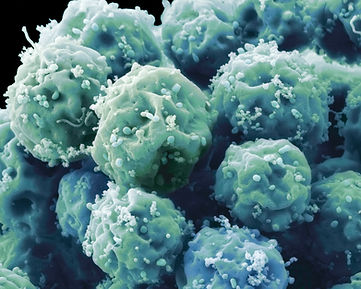
The instrumental role that the cancer microenvironment plays in the pathogenesis of cancer was highlighted over 130 years ago by Stephen Paget, when he proposed the ‘seed and soil’ hypothesis in 1889. He suggested that cancer metastasis is dependent on the characteristics of cancer cells, the seed, and also on the composition of the supportive tissue microenvironment, the....read more.
Review
Stromal bone marrow fibroblasts and mesenchymal stem cells support acute myeloid leukaemia cells and promote therapy resistance.
The bone marrow (BM) is the primary site of adult haematopoiesis, where stromal elements (e.g. fibroblasts and mesenchymal stem cells [MSCs]) work in concert to support blood cell development. However, the establishment of an abnormal clone can lead to a blood malignancy, such as acute myeloid leukaemia (AML). Despite our increased understanding of the pathophysiology of the disease, patient survival remains suboptimal, mainly driven by the development of therapy resistance. In this review, we highlight the importance of bone marrow fibroblasts and....read more.



Review
Cancer Treatment: An Overview of Pulsed Electric Field Utilization and Generation.
Patients diagnosed with cancer receive different types of treatments based on the type and the level of the tumour. An emerging treatment that differs from well-developed systematic therapies (i.e., Chemotherapy, Radiotherapy, and Immunotherapy) is Tumour Treating Field (TTF) treatment. Tumour behaviour under TTF treatment varies based on the electric field intensity; the process of exposing the tumour cells to an electric field is called electroporation. From the electrical perspective, the most efficient method for electroporation is to use a voltage pulse generator. Several pulse generator topologies have been introduced to overcome existing limitations, mitigate the drawbacks of classical generators, and provide more controllable, flexible, and portable solid-state voltage pulse generators. This paper provides a review of ....read more
Research paper
Dhx38 is required for the maintenance and differentiation of erythro-myeloid progenitors and hematopoietic stem cells by alternative splicing.
Mutations that occur in RNA-splicing machinery may contribute to hematopoiesis-related diseases. How splicing factor mutations perturb hematopoiesis, especially in the differentiation of erythro-myeloid progenitors (EMPs), remains elusive. Dhx38 is a pre-mRNA splicing-related DEAH box RNA helicase, for which the physiological functions and splicing mechanisms during hematopoiesis currently remain unclear. Here, we report that Dhx38 exerts a broad effect on definitive EMPs as well as the differentiation and maintenance of....read more.


Research paper
Targeting 3D chromosomal architecture at the RANK loci to suppress myeloma-driven osteoclastogenesis.
Bone disease represents a major cause of morbidity and mortality in Multiple Myeloma (MM); primarily driven by osteoclasts whose differentiation is dependent on expression of RANKL by MM cells. Notably, costimulation by ITAM containing receptors (i.e., FcγR) can also play a crucial role in osteoclast differentiation. Modeling the pathology of the bone marrow microenvironment with an ex vivo culture system of primary human multiple myeloma cells, we....read more
Research paper
Deletion of TSPO Causes Dysregulation of Cholesterol Metabolism in Mouse Retina.
Cholesterol dysregulation has been implicated in age-related macular degeneration (AMD), the most common cause of visual impairment in the elderly. The 18 KDa translocator protein (TSPO) is a mitochondrial outer membrane protein responsible for transporting cholesterol from the mitochondrial outer membrane to the inner membrane. TSPO is highly expressed in retinal pigment epithelial (RPE) cells, and TSPO ligands have shown therapeutic potential for the treatment of AMD. Here, we characterized retinal pathology of Tspo knockout (KO) mice using histological, immunohistochemical, biochemical and molecular biological approaches. We found that Tspo KO mice....read more.
.png)